

Create weekly or bi-weekly sessions where customer support shares trending issues, common user questions, and emerging customer feedback patterns directly with the product management team. These aren’t just status updates—they’re strategic product planning sessions where customer support insights directly influence product roadmap decisions and feature prioritization.
Feedback Best PracticesProduct ManagementSaaS Growth
Customer Support: The Unsung Heroes of Product Management

When we think about successful product management, the spotlight naturally falls on product managers and developers. They’re the strategists, the decision-makers, the ones who transform user needs into product roadmaps.
But there’s another team that plays an equally crucial role in building products that users love—one that’s often overlooked and undervalued.
Your customer support team are the unsung heroes of product management, and they hold the key to how to improve product development with customer feedback.
TLDR;
- Customer support teams have daily conversations with users and spot product issues that analytics miss
- Most companies waste this customer feedback by keeping it siloed in support tickets
- Creating feedback loops between customer support and product management leads to better products and reduced churn
- The solution is to treat customer support as product intelligence, not just a cost center
The Customer Feedback Silo Problem
Here’s a scenario that plays out at countless startups every day.
A customer encounters a confusing onboarding flow and reaches out to customer support. The customer support agent helps them through it, closes the ticket, and moves on to the next issue. Meanwhile, the same confusing flow continues to trip up other users, generating more customer support requests, and potentially causing some users to abandon the product entirely.
The customer feedback stays trapped in the customer support silo.
Whilst product managers see analytics and user research, they miss the real-time, unfiltered customer feedback that comes from actual customer support conversations.
And whilst the development team sees bug reports, they lack the broader context of user struggles and feature requests that could inform better product decisions.
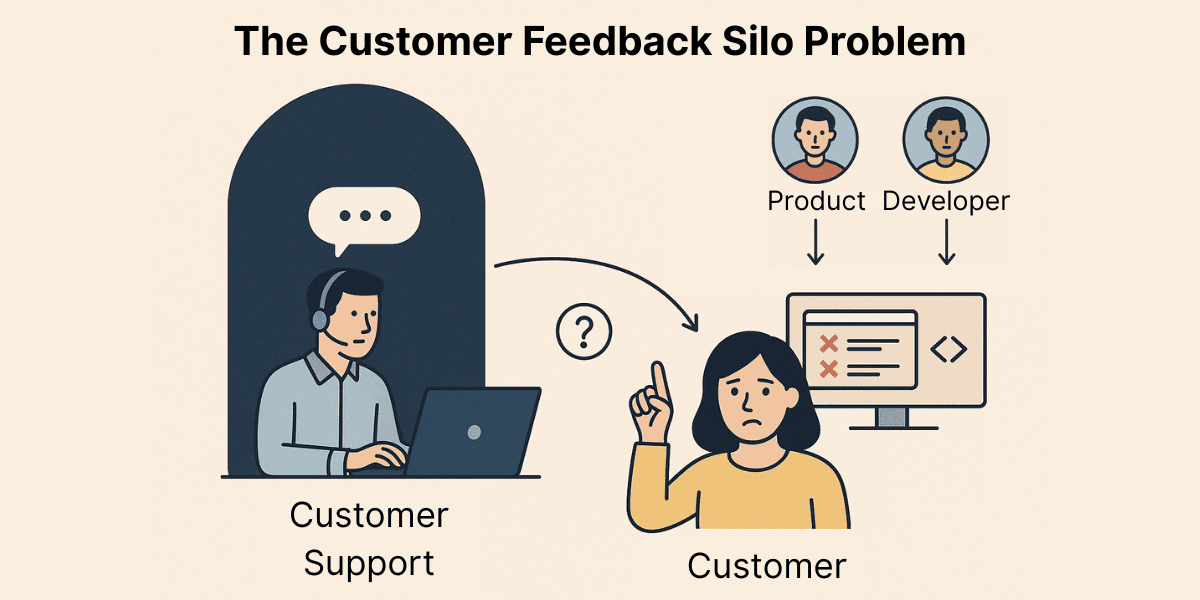
This siloed approach prevents teams from learning how to improve product development with customer feedback, and costs companies dearly by:
- Building the wrong features: Without understanding real customer feedback, product managers prioritize based on assumptions rather than actual customer needs.
- Missing obvious product improvements: Critical UX issues that could be easily fixed remain unaddressed because customer feedback never reaches the product management team.
- Higher churn rates: Users abandon products due to frustrations that could have been prevented with better customer support and product management collaboration.
- Repeated customer support requests: The same underlying product issues generate endless customer support tickets because the root causes are never addressed in the product roadmap.
From Cost Center to Customer Feedback Intelligence Source
The fundamental problem is how most founders and product managers view their customer support team. They see customer support as a necessary cost center that handles complaints and reduces user friction after problems occur.
But this perspective misses the bigger picture.
Your customer support team is actually your most valuable source of customer feedback and product management intelligence. If you don’t believe me, let’s consider the following.
- They have daily, unfiltered conversations with your users.
- They hear customer feedback that users would never mention in a product survey.
- They spot patterns across different user segments.
- They understand the gap between what your product promises and what users actually experience.
In other words, your customer support team is conducting continuous user research and market validation without anyone realizing it, which makes them essential in how to improve product development with customer feedback.
See Userback In Action
Discover how Userback helps you collect, manage, and act on user feedback with ease.
Building the Bridge: Customer Support – Product Management Feedback Loops
The solution to the customer feedback silo isn’t just about better communication. It’s about creating systematic customer feedback loops that turn customer support insights into product management decisions.
Understanding how to improve product development with customer feedback starts with these proven strategies:
1.Response Rates That Actually Matter
2.Pattern Recognition Across Communication Channels
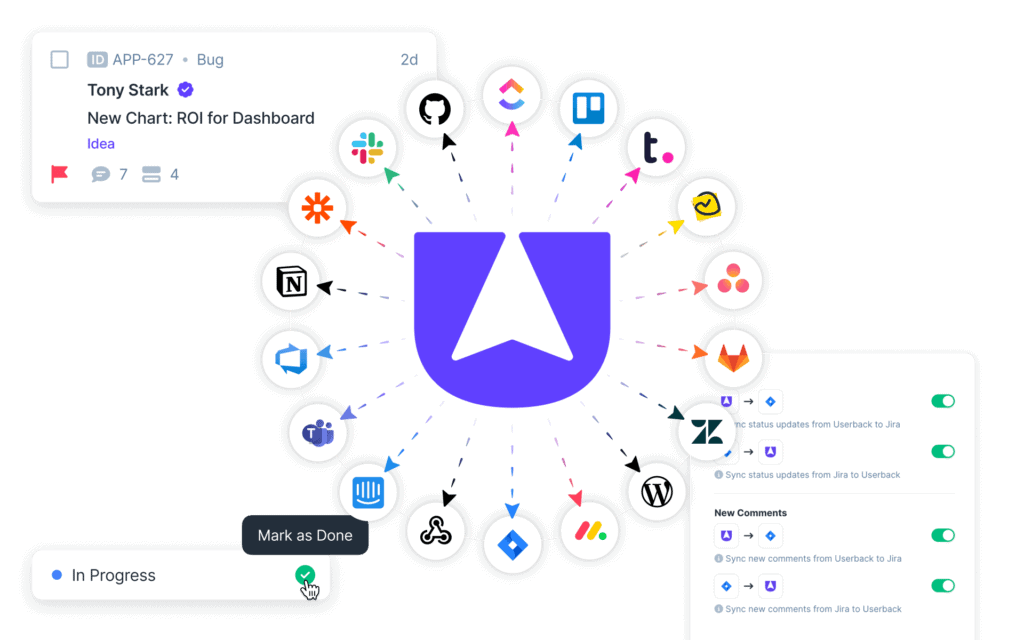
The magic happens when your customer support tickets, customer feedback tools, NPS scores, and product analytics all talk to each other.
Take this scenario for example. Suppose a customer gives you a low NPS score. When all your feedback systems are connected, instead of just seeing the NPS score, you can also see that this same customer has submitted two bugs and asked three customer support questions in the past week.
Suddenly, that NPS score isn’t just a data point—it’s a complete customer feedback story! And that story gives your product management team the context they need to understand what really matters to your users and how to prioritize your product roadmap.
3.Seamless Integration with Existing Workflows
Start categorizing and quantifying customer support requests to identify which product improvements would have the biggest impact on user satisfaction and business metrics. If 30% of your customer support tickets are about the same confusing feature, that’s not a customer support problem—that’s a product management opportunity that should be prioritized in your next sprint. This is a crucial step in how to improve product development with customer feedback.
4.Use Customer Support Metrics as Product Health KPIs
Customer support data can be a leading indicator of product-market fit and user satisfaction. Rising customer support ticket volumes in specific categories, longer resolution times, or patterns of user frustration can signal product issues before they show up in your core product metrics or user retention data.
Ready to start web application testing?
Try Userback’s visual feedback tools to execute testing with your team and users. Capture feedback and bugs with automatic screenshots, session replays, and console logs and analyze results.
The Userback Advantage
At Userback, we’ve built our platform specifically to solve the customer support – product management customer feedback gap. Here’s how our features transform the way customer support and product teams work together:
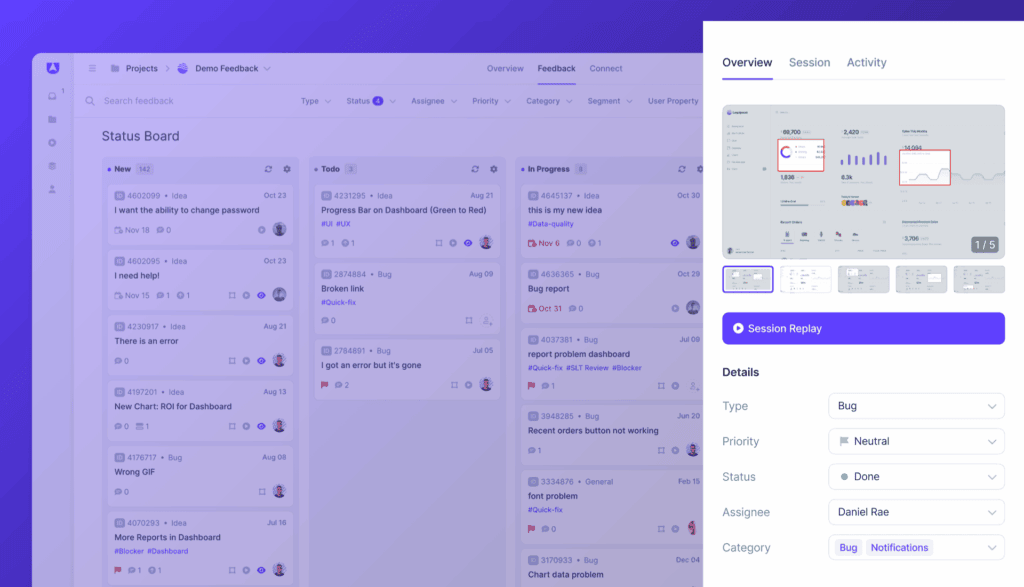
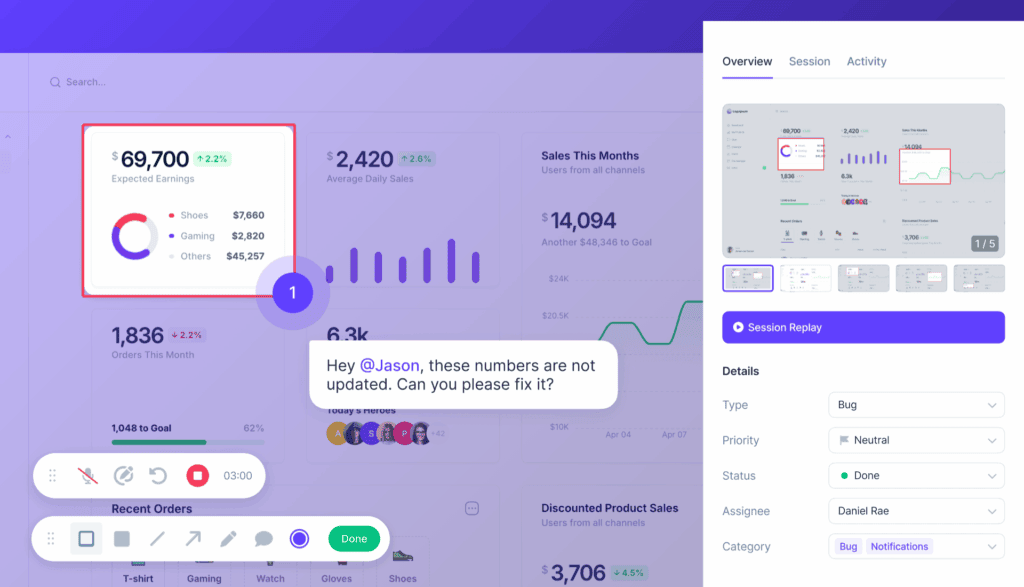
Visual Context That Eliminates Confusion: Instead of customer support agents writing “the button on the dashboard doesn’t work,” they can capture the exact screen, annotate the specific element, and include browser console errors—all in one visual report. Product managers receive pixel-perfect customer feedback that eliminates the back-and-forth clarification emails that slow down product decisions.
Automatic Technical Data Capture: Every piece of customer feedback automatically includes browser version, screen resolution, user agent, and console logs. Customer support teams don’t need to ask users for technical details, and product managers get everything they need to understand and prioritize issues immediately.
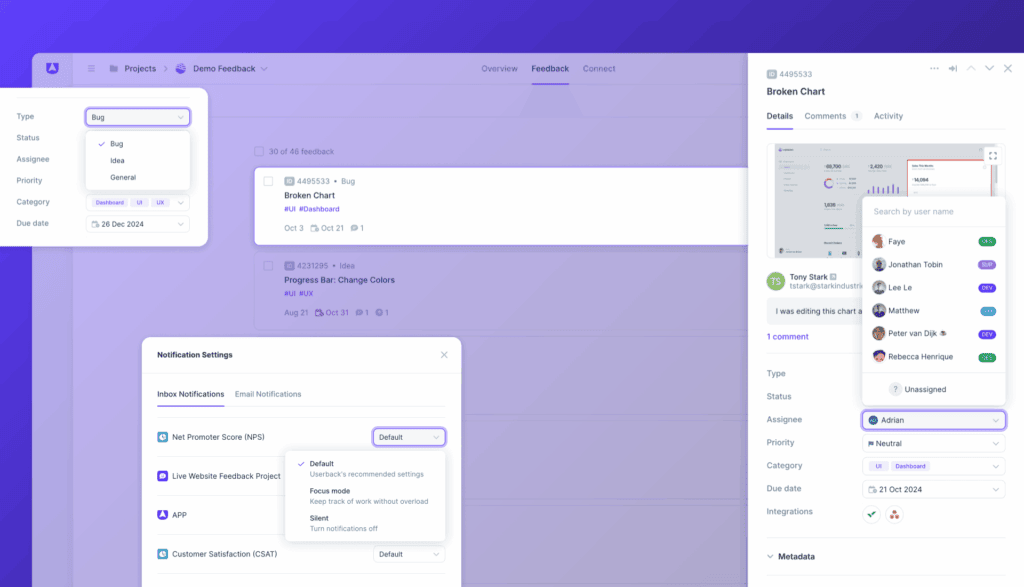
Customer Feedback Categorization and Routing: Our smart tagging system allows customer support teams to categorize customer feedback as bugs, feature requests, or general issues, then automatically route them to the right product team members. No more customer feedback getting lost in generic customer support tickets.
Integration with Your Existing Product Management Workflow: Userback connects directly with tools your teams already use like Jira, ClickUp, Intercom, and more. Customer support feedback flows seamlessly into your product management workflow without requiring teams to change their processes or switch between multiple platforms.
Real-Time Collaboration: When a customer support agent captures customer feedback, product managers can comment directly on the visual annotation, ask clarifying questions, and provide status updates. Customer support agents can keep customers informed about product roadmap decisions without playing phone tag between teams.

Making the Shift
The companies that get this right don’t just have better products. They have more strategic product management, more efficient customer support teams, happier customers, and faster product development cycles. They’ve realized that the best way to reduce customer support volume isn’t to hire more customer support agents. Rather it’s to use customer feedback to inform product management decisions that fix the underlying product issues creating customer support requests in the first place.
Your customer support team is already doing the work of user researchers, market analysts, and customer success managers. The question is, “Are you leveraging their customer feedback in your product management process, or letting valuable customer feedback get lost in the ticket queue?”
It’s time to recognize your customer support team for what they really are: the unsung heroes who hold the key to building products that users actually love and product roadmaps that solve real customer problems. They are essential for how to improve product development with customer feedback.
Getting Started: How to Improve Product Development with Customer Feedback
Ready to transform your customer support team from cost center to customer feedback intelligence source? Start with these three steps:
- Schedule a weekly customer support-product management sync: Bring your customer support and product management teams together for 30 minutes each week to discuss trending issues, customer feedback, and potential roadmap impacts
- Audit your customer feedback tools: Ensure your customer support tickets, customer feedback systems, and product analytics can be viewed together to create a complete picture of user experience for better product management decisions
- Create a customer support-to-product management workflow: Establish a clear process for escalating customer feedback from customer support conversations to product planning discussions and roadmap prioritization
Your product managers might be the strategists of product success, but your customer support team are the ones who can make sure you’re building the right product roadmap in the first place. Learning how to improve product development with customer feedback starts with recognizing the goldmine of insights your customer support team already has.